
Predict and prevent surgical complications

Every patient,
under watch.
SurgicalGuardian is building Guardian: a continuously updating digital twin of the surgical patient that predicts complications after surgery, so care teams can act while there is still time.
Death within 30 days of surgery is the third leading cause of death in the U.S.
Laude Institute, Moonshots program description
-
300M+
surgical procedures performed worldwide each year
The Lancet, Global Surgery
-
4.2M
deaths within 30 days of surgery globally, every year
Nepogodiev et al., The Lancet 2019
-
~1 in 10
surgical patients experience a complication
surgical outcomes literature
-
1M+
surgical patients in the data used to train Guardian
Laude Institute, Moonshots // ONE
The problem
The risk score is calculated once. The patient keeps changing.
Surgical risk today is assessed before the operation: an ASA class, a calculator score, a snapshot from the pre-op clinic. After surgery, that estimate is already stale, yet it is often the last formal risk assessment the patient gets.
Recovery on the ward runs on periodic checks. Between them, the early signals of a major complication accumulate quietly in the chart: a creeping heart rate, a drifting creatinine, an escalating pain regimen. No clinician has time to re-read the full record every hour for every post-surgical patient.
So deterioration is usually recognized when it becomes obvious. By then the options are fewer and worse.
| Pre-op clinic | In the OR | PACU | Ward, days 1 to 5 Gap | Discharge |
|---|---|---|---|---|
| Risk scored once, from a snapshot of history, labs, and vitals | Continuous monitoring by the anesthesia team, minute to minute | Close observation for hours, then transfer to the ward | Checks every 4 to 8 hours. Highest-risk window, least continuous attention. Most postoperative deaths originate here. | Follow-up scheduled weeks out; 30-day mortality window still open |
The product
A risk estimate that moves with the patient
GUARDIAN Generalized Unified Algorithm for Risk of Postoperative Deaths, Ischemia, AKI and Neurological Injuries
Guardian maintains a digital twin for each surgical patient: a continuously updating model that draws on preoperative, intraoperative, and postoperative data to re-compute the risk of death, stroke, and heart attack as new information arrives.
It is trained on data from more than one million surgical patients and designed to be embedded directly in the electronic health record, where care teams already work, not in a separate dashboard nobody opens.
When a patient's trajectory diverges from expected recovery, Guardian flags it and shows which signals moved the risk, so the team can evaluate a specific concern rather than a bare number.
Guardian is designed to predict and prevent postoperative mortality, stroke, cognitive and neurological injuries, myocardial ischemia, acute kidney injuries, limb ischemia, and other costly post-surgical complications.
- Pre-op score (static)
- Guardian estimate (updating)
- Flag raised: tachycardia and creatinine rise
-
Before surgery
The twin is assembled
Medical history, comorbidities, medications, labs, and baseline vitals produce an individualized starting risk for death, stroke, and heart attack, and inform surgical planning, not a population average.
-
During surgery
The twin updates in the OR
Physiologic signals, the anesthetic course, and operative events feed the model. Two patients with identical pre-op scores leave the OR with different risk profiles, and the twin reflects that.
-
After surgery
The twin keeps watch
As vitals, labs, and recovery milestones stream in, Guardian re-computes risk continuously and flags diverging trajectories with the contributing signals attached, hours before deterioration becomes obvious.
Innovation
SurgicalGuardian, Inc. is developing a robust, generalizable, EHR-implementable, and scalable AI tool, Guardian, to predict and prevent postoperative mortality, stroke, cognitive and neurological injuries, MI, AKI, and other costly post-surgical complications. Guardian innovatively integrates preoperative clinical risks to proactively predict personalized risk for postoperative mortality, as well as major cardiac, cerebral, and organ injuries.
| Capability | Guardian | NSQIP RC | STS RC | AATS RC |
|---|---|---|---|---|
| Preoperative risk prediction | Yes | Yes | Yes | Yes |
| Intraoperative and postoperative risk prediction | Yes | No | No | No |
| Automated EHR data capture | Yes | No | No | No |
| EHR integration of CDS for clinician use | Yes | No | No | No |
| Follows SNOMED CT, LOINC, or RxNorm standards | Yes | No | No | No |
| Rapid adaptability with new variables | Yes | No | No | No |
| Model development and refitting location | Customer institution | Central repository | Central repository | Central repository |
RC: risk calculator.
Specific innovations and competitive advantages of Guardian (Table 1) include:
- Improved perioperative predictive performance over existing tools.
- Inclusion of highly predictive intraoperative data, including triple-low events; rich physiological, hemodynamic, ventilatory, and medication data; blood loss; surgical complications; and intraoperative neuromonitoring (IONM) changes.
- Guardian is embedded in the EHR, improving ease of use across the perioperative continuum by leveraging rich, automated, and personalized EHR data that is often missed by STS, NSQIP, and other existing models.
- Reliability documented at the level of use. Performance is reported by clinical acuity level, case mix, and hospital, so a prospective hospital can assess whether Guardian works for its own patients rather than relying on results from a pooled national cohort.
- A stated local data requirement. Three model tiers are available so that a new hospital can match its EHR data availability to a model, as well as the minimum number of cases needed at the new hospital to adapt a model.
- A step beyond prediction to clinical decision support (CDS), using net benefit analysis to define actionable risk thresholds.
- Designed to be the first FDA-regulated SaMD to predict postoperative mortality and costly major complications.
Recognition
Selected for funding in the Laude Institute's Moonshots program
The Moonshots program asked leading AI researchers one question: if you had the resources, how would you use AI to solve humanity's hardest problems? Our proposal was selected in the Advancing Healthcare category from a field that included Nobel laureates, Turing Award recipients, and a Fields Medalist.
Laude Institute Moonshots // ONE, Advancing Healthcare category
-
Top 12
of 125 proposals from 600+ researchers across 47 institutions
-
$200,000
in seed funding for a six-month project
-
27
member selection committee chaired by Dave Patterson, including Jeff Dean, John Jumper, and John Hennessy
-
January 2027
presenting to philanthropic funders
The team
The people building the model manage surgical patients for a living
SurgicalGuardian was founded by University of Pittsburgh faculty spanning anesthesiology and perioperative medicine, biomedical informatics, and computer science. The clinical problem, the data, and the modeling all live on one team.
-
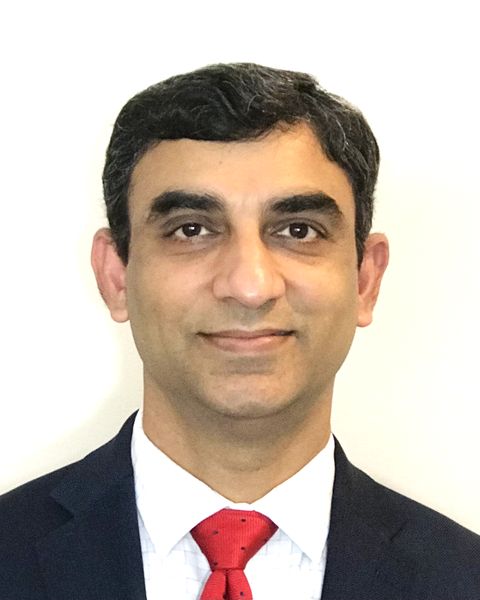
Senthil Sadhasivam, MD, MPH, MBA, FASA
Co-founder and Chief Executive Officer
Senthil Sadhasivam, MD, MPH, is a co-founder and CEO of SurgicalGuardian. He co-leads development and commercialization of Guardian, an AI technology to reliably predict and prevent deaths, stroke, heart attack, kidney injuries, and other serious and costly complications after surgery. Senthil is a Tenured Professor in Anesthesiology and Executive Vice-Chair of Clinical Quality, Patient Safety and Clinical Research, Department of Anesthesiology & Perioperative Medicine, University of Pittsburgh Medical Center (UPMC), Pittsburgh, Pennsylvania. Senthil is also the Associate Dean for Perioperative Research at University of Pittsburgh School of Medicine. Senthil is an impactful clinician-scientist-entrepreneur with expertise in translating multiple clinical innovations to commercialization, SBIR/STTR funding, multiple medical devices development, regulatory approvals for medical devices, patented intellectual properties, raising capital and taking companies public in the US market, and insurer reimbursements.
-
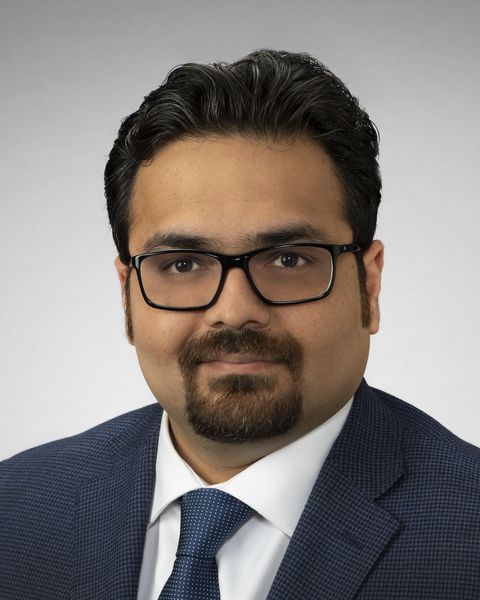
Harikesh Subramanian, MBBS, MS, D.ABA, ABPM-CI
Chief Medical Officer
Harikesh Subramanian, MBBS, MS, D.ABA, ABPM-CI serves as Chief Medical Officer, bringing extensive expertise in clinical medicine, perioperative care, and healthcare innovation. A board-certified adult cardiothoracic anesthesiologist and clinical informatician, Dr. Subramanian combines frontline clinical experience with advanced training in biomedical informatics to drive data-driven improvements in healthcare. He has held academic appointments at the University of Pittsburgh School of Medicine and has contributed to research in artificial intelligence, machine learning, perioperative medicine, and cardiovascular anesthesiology. His leadership focuses on advancing clinical quality, patient safety, digital health, and evidence-based innovation to improve outcomes while supporting organizational growth and operational excellence.
-
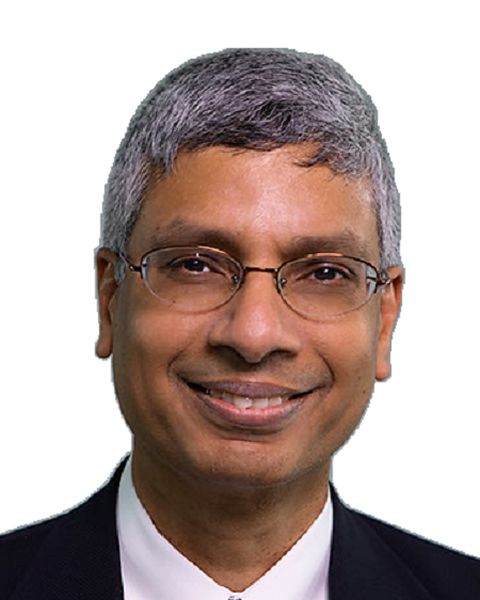
Shyam Visweswaran, MD, PhD
Co-founder and Chief Information Officer
Shyam Visweswaran, MD, PhD, is a co-founder and Chief Information Officer (CIO) of SurgicalGuardian. He co-leads the development, evaluation, and commercialization of Guardian, a groundbreaking AI technology designed to reliably predict and prevent serious complications following surgery. Shyam is a tenured Professor of Biomedical Informatics and is the Chair of the Department of Biomedical Informatics at the University of Pittsburgh School of Medicine in Pittsburgh, Pennsylvania. His training encompasses artificial intelligence, biomedical informatics, and clinical neurology, enabling him to effectively apply AI to biomedicine, with a specific focus on developing and evaluating AI-based clinical decision support tools. He is an authority on harmonizing electronic health records (EHRs) and played a key role in creating the Neptune research data warehouse at the University of Pittsburgh School of Medicine. This warehouse integrates structured, text, and imaging data from UPMC. He also led efforts in developing a common data model and ontologies for the ENACT network, which connects EHRs across 57 academic medical centers and provides access to over 140 million patient records. Shyam has expertise in the technical development, implementation, and evaluation of AI-based clinical decision support systems at the University of Pittsburgh. He has co-founded several med-tech startups and possesses significant experience with regulatory approvals for medical devices, managing patented intellectual properties, and raising capital.
-
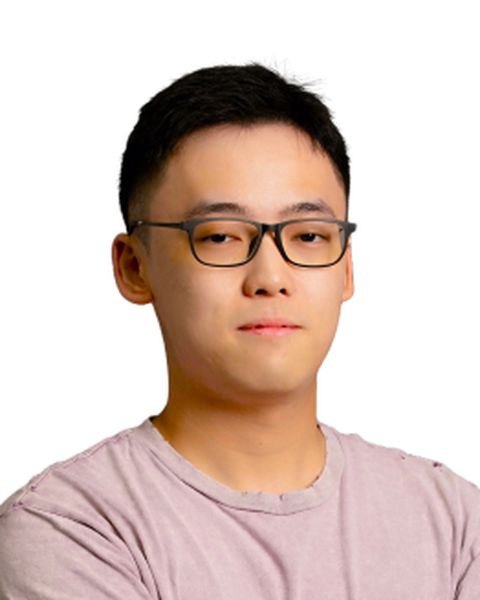
Ryan Shi, PhD
Co-founder, Technology
Ryan Shi is an Assistant Professor in the Department of Computer Science at the University of Pittsburgh. He works with public-sector organizations to address societal challenges in food security, healthcare, and poverty alleviation through AI. Several of his systems have been deployed by these organizations worldwide. His honors include a 2026 Amazon Research Award, Google Academic Research Awards in 2024 and 2025, the 2024 Allen Newell Award for Research Excellence, and a 2022 Siebel Scholar Award. He was named to the 2025 AAAI New Faculty Highlights and the 2022 Rising Stars lists in Data Science and ML/AI. He holds a Ph.D. in Societal Computing from Carnegie Mellon University, advised by Fei Fang, and a B.A. in Mathematics and Computer Science from Swarthmore College. Prior to his faculty appointment, he consulted for DataKind and interned at Microsoft and Facebook.
-
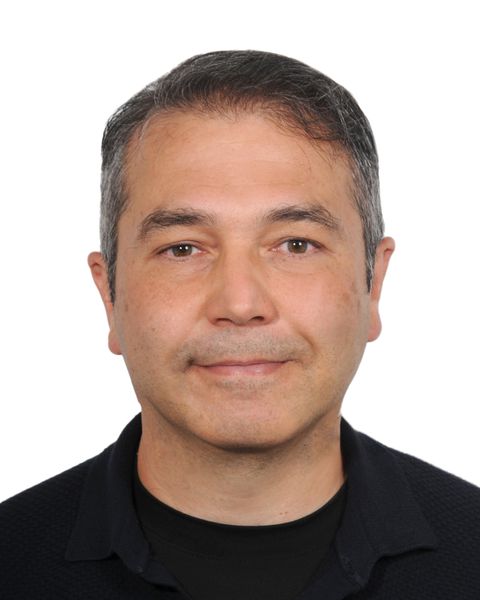
Ata Murat Kaynar, MD, MPH
Co-founder and Chief Scientific Officer
Ata Murat Kaynar, MD, MPH, is a co-founder and Chief Scientific Officer of SurgicalGuardian. He co-leads the development, evaluation, and commercialization of Guardian, an AI technology designed to reliably predict and prevent serious complications following surgery.
Murat is a Professor of Anesthesiology and Critical Care Medicine and a translational clinician-scientist at the University of Pittsburgh, which he joined in 2006 as Program Director of the Anesthesiology Critical Care Medicine Fellowship. His work spans clinical care as a critical care anesthesiologist, fellowship administration, and translational research in telehealth. As Director of Telemedicine for the Department of Anesthesiology, he built and deployed the infrastructure used to diagnose and manage perioperative events over telemedicine technology. His research program focuses on access to quality health care with resultant improved patient outcomes supported by active NIH-funded grants. His combined clinical, research, and telehealth expertise strengthens SurgicalGuardian's ability to improve perioperative outcomes.
Where we are
Early, funded, and building
-
2026 Funded
Selected for Laude Institute Moonshot funding. Company formed in Pittsburgh, PA to carry the work from research to the bedside.
-
Now Building
Developing and validating Guardian on perioperative data from more than one million surgical patients.
-
January 2027
Presenting Moonshot results to philanthropic funders as part of the program's next stage.
Working on post-surgical outcomes? Talk to us.
We are looking for health systems, research partners, and funders who want fewer patients dying in the 30 days after surgery.